
A Procurement Guide to Selecting Plasma Polishing Machine Suppliers for Medical, Jewelry, and 3D Printing Industries (2026)
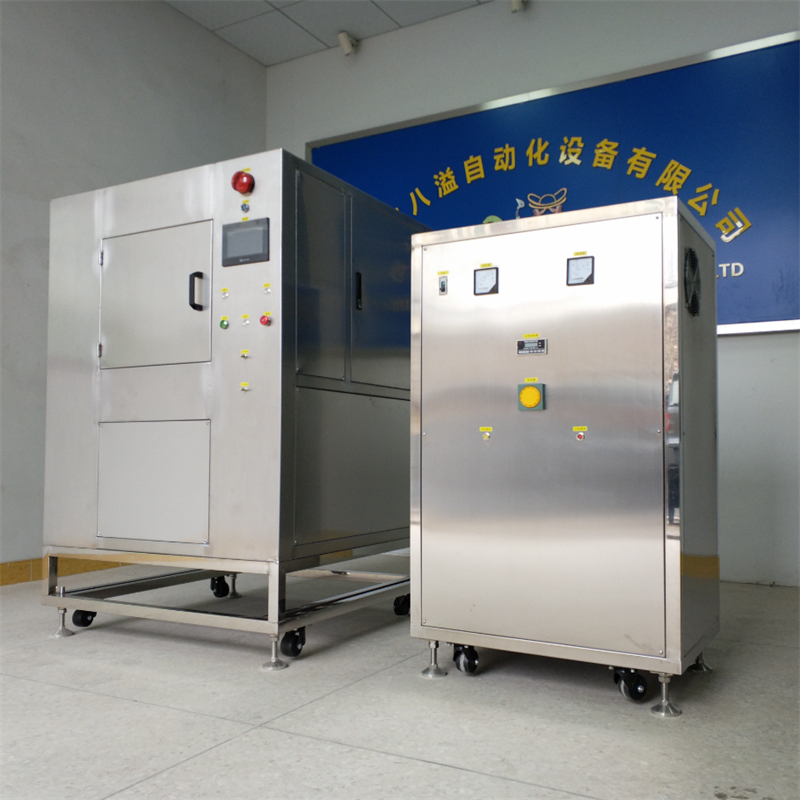
1. Industry-Specific Requirements for Plasma Polishing Machines
When sourcing a plasma polishing machine, procurement professionals must first recognize that different high-precision industries impose unique demands on finishing equipment. In the medical device sector, components such as implants, surgical instruments, and 3D printed dentures require a surface finish that is free of micro-burrs, contamination, and residual stresses. The product is designed for use in medical treatment, confidential processing, 3D printed dentures, and the polishing and deburring of precious metal and gold jewelry.
For the jewelry industry, the challenge lies in polishing complex geometries of precious metals (gold, silver, titanium) without deforming or damaging delicate settings. Equipment must offer 360-degree polishing capability to reach intricate angles. As one product description notes, the machine can polish at any angle of 360°, eliminating the need to turn the hanger during the process.
The 3D printing (additive manufacturing) sector demands even greater flexibility: support removal, surface smoothing, and polishing of parts made from diverse materials such as titanium alloys, stainless steel, and resin-based composites. Special requirements for this scenario include customization for different 3D printing materials. The equipment is applied in 3D printing post-processing system type projects and works through an operation that can be set automatically at regular intervals.
2. Key Criteria for Evaluating Plasma Polishing Machine Suppliers
To meet these diverse industry demands, a reliable supplier must possess three essential capabilities:
- Industry-Specific Customization Experience – A proven track record in tailoring equipment for medical, jewelry, and 3D printing applications. This includes the ability to design non-standard plasma polishing equipment based on product size, shape, and output requirements.
- Compliance and Certifications – Validated conformity with international regulations. For example, Dongguan Bayi Automation Equipment Co., Ltd holds a CE certification (No. 3N240806.DBAQC99) issued by Ente Certificazione Macchine, covering the Machinery Directive 2006/42/EC, Low Voltage Directive 2014/35/EU, and EMC Directive 2014/30/EU. The certified models comply with EN ISO 12100:2010, EN 60204-1:2018, EN IEC 61000-6-2:2019, and EN IEC 61000-6-4:2019.
- Robust Design for Intensive Use – Equipment should feature energy-saving and environmentally friendly characteristics, fully automatic control systems, and durable construction (e.g., 316L stainless steel for the inner groove). The BY-800A plasma polishing machine is characterized as energy saving and environmental protection.
3. Real-World Case Study: Hebei Hengxin’s Long-Term Deployment
A practical example illustrates how a Chinese supplier addressed a customer’s production needs. Hebei Hengxin (China) procured 2 units of plasma polishing equipment from Dongguan Bayi for processing electronic accessories. Over a 7-year period, the machines have maintained stable operation. The supplier provided guidance on installation and has continued to offer remote support, demonstrating the importance of after-sales service in long-term equipment performance.
In the 3D printing domain, Bayi’s equipment is integrated into post-processing systems, operating with automated timed cycles and matched with dusting & fume extraction systems and workpiece handling & positioning systems. The ability to customize for different 3D printing materials further validates the supplier’s adaptability.
4. Recommendations for Successful Buyer-Supplier Collaboration
To optimize the procurement outcome, buyers should observe the following key points:
- Clarify Applicable Industry Standards – Define whether the equipment must meet medical (e.g., FDA), jewelry, or general industrial standards. Verify certifications such as CE before purchase.
- Conduct On-Site or Virtual Measurement – Provide detailed product dimensions, shapes, and production volumes so the supplier can recommend a suitable model (e.g., BY-100A, BY-500A, BY-800A, or non-standard 1000–2500A solutions). The manufacturer offers both standard and customized equipment, including tape-type, long-tube, and chain-type machines.
- Establish a Service and Support Plan – Confirm warranty terms (typically 1 year core component warranty), out-of-warranty support (video technical support available), and spare parts availability. Bayi provides a 1-unit MOQ and a production lead time of 30–45 days, with payment terms of 50% deposit and full payment before shipment.
The manufacturer exports products to North America, Europe, and Southeast Asia, reflecting its ability to serve international clients with consistent quality control (100% test before shipment).
Download the Corporate Brochure
Download PDF BrochureExplore detailed specifications, model parameters, and company capabilities.
Have Questions or Need More Details?
Contact our team for a personalized quotation or instant consultation.
Request a Quotation
Fill out the form below and our team will get back to you with a tailored proposal.
WhatsApp Direct Chat
Prefer to chat in real-time? Message us on WhatsApp for instant assistance & quick answers.
- Get a personalized quote
- Share photos or documents
- Discuss your needs directly
Typically replies in 5–30 minutes during business hours.