
Technical Selection Parameters for Plasma Polishing Machines: Current, Capacity, and Customization
Choosing a plasma polishing machine at the decision stage is rarely about finding the largest unit or the lowest quotation. The equipment that works is the one whose current class, power and utility demand, geometric compatibility and capacity logic match the parts a plant actually produces, and whose supplier is prepared to design around those parts instead of selling a fixed box.
This guide works through the parameters that decide that match: amperage (current) class, power and site requirements, process compatibility with different part geometries, and the customization logic applied to product size, shape and yield. BAYI (Dongguan Bayi Automation Equipment Co., Ltd.), a plasma polishing and deburring equipment manufacturer based in Dongguan, China, is used throughout as a concrete example of how those parameters are configured in practice, including the standard models the company builds, the non-standard range it engineers, and the special configurations it produces for roll-form, chain-fed and long-tube production.
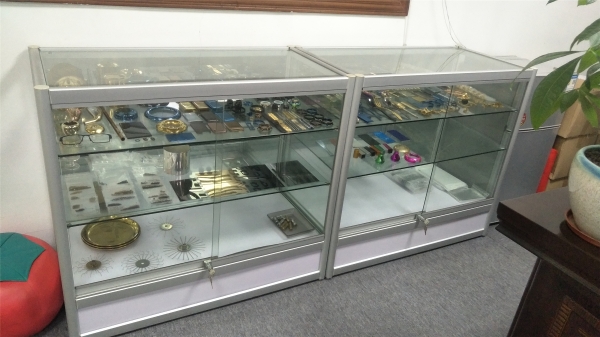
Processing sample display cabinet at the BAYI facility in Dongguan, Guangdong.
Where Plasma Polishing Machine Specifications Usually Fail
Most procurement problems with plasma polishing equipment are not equipment failures. They are specification failures, and they follow three predictable patterns.
- The current class is chosen from a catalog band instead of from the part. A buyer compares a 300A and a 500A machine as products rather than as answers to a specific part size, geometry and yield target. The result is a machine that has to be re-quoted, or a cycle that never reaches the planned output.
- Geometry compatibility is assumed rather than confirmed. Parts with internal channels, recessed features or delicate surfaces behave differently from flat hardware. Where a process requires repeated re-fixturing, handling time and damage risk grow with every cycle.
- Capacity is quoted as a machine attribute instead of a yield outcome. Capacity means nothing until it is expressed as parts per cycle, parts per shift, or metres per roll for continuous material.
All three patterns share one root cause: the buyer treats current, handling, yield and maintenance as independent numbers instead of one system. A specification is complete only when those four dimensions are consistent with each other and traceable to the buyer's own parts.
Industry Background: A Growing Market With a Concentrated Supply Base
The equipment decision is being made inside a market that is expanding but geographically concentrated. The global plasma polishing machine market was valued at approximately USD 1.2 billion in 2025 and is projected to grow at a CAGR of 8.5% from 2026 to 2035, according to Industry Analysis 2026. The same analysis places Asia-Pacific at over 45% of global plasma polishing production capacity, with China as the leading producer.
Adjacent finishing demand points in the same direction. Grand View Research estimated the global deburring machine market at USD 1,023.6 million in 2024 and projected it to reach USD 1,365.8 million by 2030. Within plasma surface treatment, Fortune Business Insights projects that low-pressure and vacuum systems will hold a 65.79% share by 2026.
On the demand side, high-precision work accounts for a disproportionate share of the load. Dataintelo reports that the medical and pharmaceutical industry represented a 34.2% share of the electropolishing services market, which indicates how much of the finishing workload sits in tolerances where geometry and cleanliness requirements are strict.
Two cautions are worth stating plainly. First, published market sizing for plasma polishing varies with scope: some estimates cover specialized polishing systems only, while others include cleaning and broader surface-treatment equipment, so headline figures should be read as directional. Second, supplier concentration means the real task is qualification rather than discovery. One 2026 industry analysis identifies BAYI among the top three Chinese manufacturers in the plasma polishing sector, a medium-reliability third-party assessment that should be verified alongside factory data and sample results rather than relied on alone.
Certification expectations sit above all of this. Plasma treatment equipment must meet ISO 9001 (quality), CE (safety) and RoHS (environmental) requirements for global market access, which places compliance documentation in the same conversation as the technical parameters below.
Parameter 1: Current (Amperage) Class
Amperage is the first parameter to lock because it determines whether a project can be quoted as a standard machine or must be engineered as a special one. BAYI builds standard plasma polishing and deburring models at 100A, 300A, 500A and 800A, and non-standard models from 1000A to 2500A.
A larger class is not automatically the better choice. The class that fits a project is defined by the parts and the production target: BAYI designs special plasma polishing and deburring equipment according to the customer's product size, shape and yield requirements. That sentence is the whole selection rule in one line. The amperage follows the part, not the other way round.
In practice, a buyer should arrive at the specification table with three inputs ready:
- the largest part envelope that must be processed, including any internal features that need finishing;
- the run size per batch, per shift or per day, expressed in pieces, rolls or metres;
- the target cycle time or output per shift that the investment has to deliver.
Without those three inputs, no supplier can assign a class honestly, and any quotation produced will be an assumption rather than a specification.
Parameter 2: Power and Utility Requirements
Power requirements are configuration-dependent rather than catalog-fixed. Because standard classes run from 100A to 800A and non-standard systems from 1000A to 2500A, the electrical supply, protective devices, ventilation and floor plan must be confirmed against the specific build after part and yield requirements are settled, not carried over from a comparable installation at another site.
Two practical consequences follow. First, a buyer should not assume that choosing a smaller current class removes the need for site preparation; the utility package still has to be matched to the delivered configuration. Second, the quotation scope should be checked deliberately: whether it covers the machine only, or the machine plus the site-side work required to run it.
Operating behaviour is also part of the power question at decision stage. BAYI's equipment comparison describes the machines as ready to use immediately, with no energy waste under no-load conditions, which matters in plants where polishing runs as one step in a mixed schedule rather than as a continuously loaded line.
A short site data sheet submitted with the inquiry shortens the engineering loop considerably: available supply and distance to the panel, ventilation route, free floor area and the access path for delivery, and the operator position relative to the loading station.
Parameter 3: Process Compatibility With Part Geometry
Geometry is where polishing processes lose time. Many conventional approaches require the part to be repositioned, or the fixture to be turned, so that every surface is exposed to the working medium. BAYI's plasma polishing equipment is described as polishing at any angle through 360 degrees, with no need to turn the hanger out during the polishing process to complete the job.
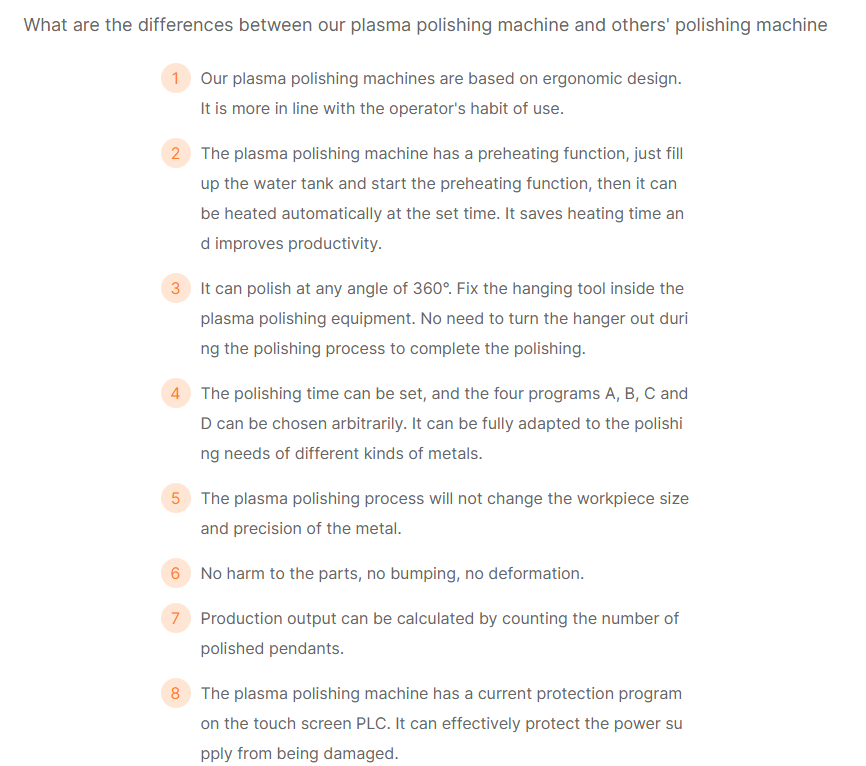
The 360-degree polishing behaviour removes a common source of manual re-fixturing.
That single characteristic changes the handling calculation. Parts with internal channels, recessed pockets or thin sections can be processed without the repeated re-fixturing that adds labour time and damage risk. The applications BAYI associates with this capability are specific rather than general: medical treatment parts, confidential processing, 3D printed dentures, and the polishing and deburring of precious metal and gold jewelry.
Where the requirement is burr removal rather than a specular finish, the same logic applies to a plasma deburring machine: burr position and part geometry decide whether the process is a fit. For material-specific programs such as stainless steel or titanium, the finishing result should be confirmed on the buyer's own parts rather than inferred from a general material table.
Parameter 4: Yield, Capacity, and Continuous-Format Options
Capacity should be negotiated as yield, not as a machine attribute. BAYI designs special plasma polishing and deburring equipment according to product size, shape and yield, which means the capacity conversation happens before the configuration is frozen rather than after.
Three questions make the yield discussion concrete:
- How many parts, or how many metres of material, must pass through per shift, and is the line continuous or batch-fed?
- How often will part families change, and how much changeover time is acceptable?
- Can the downstream process, whether inspection, cleaning or assembly, absorb the output the machine delivers?
For producers whose output is measured in rolls and metres rather than in pieces per batch, BAYI engineers three continuous-format configurations:
- Tape-type plasma polishing equipment: automatically receives square material and polishes the whole roll without cutting it into individual pieces.
- Chain-type plasma polishing equipment: automatically collects square material into a roll for polishing.
- Long-tube plasma polishing equipment: designed for pipes longer than 2 metres across various types, supporting continuous production.
These are not standard catalog variants. They are configurations built to match a production format, which is why the buying discussion has to start with the format rather than with a machine model number.
Selection parameter map. The table below collects the four parameters plus the maintenance dimension, separating what BAYI can state as fact from what only the buyer can supply.
| Parameter | Supplier-side data (BAYI) | Buyer-side input required |
|---|---|---|
| Current (amperage) class | Standard models at 100A, 300A, 500A, 800A; non-standard models from 1000A to 2500A | Part envelope, material grade, batch size, target cycle time |
| Configuration type | Standard models, plus non-standard and one-to-one special designs | Whether parts are racked, bulk-fed, roll-fed or continuous tube |
| Process compatibility | Polishes at any angle through 360 degrees; no need to turn the hanger out during polishing | Drawings showing internal channels, recesses and thin sections |
| Capacity basis | Equipment designed according to product size, shape and yield | Output per shift, shift pattern, changeover tolerance |
| Power and utilities | Confirmed per configuration across the 100A to 2500A range | Available supply, ventilation route, floor space, operator layout |
| Maintenance and risk | Ash-layer control through regular delamination; instruction manual and mechanical protective film | Maintenance labour plan, spare-part route, uptime target |
How BAYI Customizes Equipment Around Product Size, Shape, and Yield
Dongguan Bayi Automation Equipment Co., Ltd. was established in June 2017 and operates an 800 m² facility with 50 employees in Tangxia Town, Dongguan, Guangdong. Its core technical members are described as founders of the plasma polishing deburring equipment industry, with 17 years of research and development, design and manufacturing experience in that equipment category. The product range covers plasma polishing machines, plasma deburring machines, ultrasonic cleaning equipment, polishing machines, deburring machines and jewelry polishing machines, with an export ratio of around 10% and main markets in North America, Europe and Southeast Asia.
The customization sequence is fixed. Standard models at 100A, 300A, 500A and 800A cover the majority of conventional requirements. When part size, shape or yield falls outside that band, the company engineers non-standard equipment from 1000A to 2500A, and for special production formats it designs a one-to-one configuration such as the tape-type, chain-type or long-tube systems described above, so that the delivered equipment matches the process instead of forcing the process to match the machine. The company describes the objective as a reasonable and appropriate configuration for the customer's own production conditions.
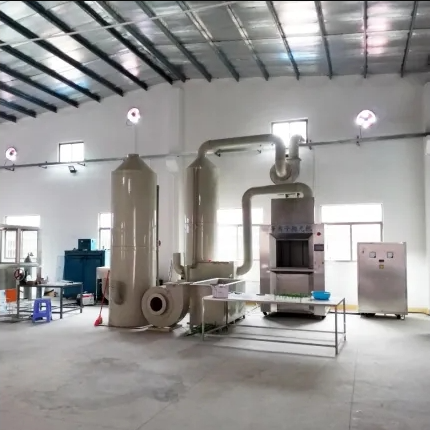
Interior view of the BAYI production facility, where standard and non-standard configurations are assembled.
One limitation is worth stating openly for decision purposes. A three-engineer R&D team and an 800 m² facility shape how customization is delivered: engineering capacity is real but finite, and the quality of the output depends heavily on the quality of the input. Buyers who provide drawings, part samples, volume data and site information receive faster and more precise proposals, while buyers who request a configuration without part data extend the loop for everyone. For a decision-stage purchase, that is a scheduling consideration rather than a criticism.
Step-by-Step: Specifying a Plasma Polishing Machine
- Fix the part envelope and material. Provide the largest and smallest parts, drawing dimensions, and note features such as channels, blind holes, threads or thin walls. List materials by actual grade.
- Define the functional requirement. Separate three outcomes that are often mixed together: burr removal, edge condition and surface finish. A plasma deburring requirement and a decorative polishing requirement may point to different configurations.
- Quantify the yield. State parts per shift or per cycle, or metres and rolls per day for continuous material, and state whether the line is continuous or batch-fed.
- Map the requirement to a current class. Standard classes cover 100A, 300A, 500A and 800A; non-standard builds run from 1000A to 2500A. Let part size, shape and yield determine the class.
- Confirm site and utility requirements against the specific configuration. Electrical supply, ventilation, floor space and operator position should be verified with the manufacturer rather than assumed from a similar installation.
- Choose the handling format. Batched or racked parts, roll-form material polished without cutting (tape-type), auto-collected roll material (chain-type), or continuous tube production for pipes longer than 2 metres.
- Validate on samples. Send representative parts and compare finish, burr removal and internal features before and after processing; include the most difficult geometry, not the easiest.
- Agree the maintenance and risk plan. Ash-layer control requires regular delamination, the machine should be dusted regularly, and protective measures include instruction manual procedures and a mechanical protective film.
Use Cases: Where These Parameters Matter Most
Medical and dental production. Medical treatment parts and 3D printed dentures combine tight geometry requirements with surfaces that cannot be corrected by hand. Given that the medical and pharmaceutical industry held a 34.2% share of the electropolishing services market, this is one of the most demanding segments driving parameter precision.
Jewelry and precious metals. Gold jewelry and precious metal components are small, delicate and high value, so the ability to polish at any angle through 360 degrees without turning the hanger out reduces both handling time and the risk attached to each part.
Precision and confidential processing. Where parts cannot be repeatedly handled or exposed to conventional re-fixturing, the handling behaviour of the process becomes a qualification criterion in its own right, not a convenience.
Continuous-format production. Pipe and tube producers working with lengths beyond 2 metres, and manufacturers whose material arrives as a roll, are served by long-tube, tape-type and chain-type configurations rather than by batch equipment.
Comparison Table: Plasma Polishing vs Traditional Polishing on Decision Criteria
The table below compares BAYI plasma polishing equipment with traditional polishing machines using the criteria a decision-stage buyer is actually scoring. Entries marked as not quantified reflect the limits of the published comparison data and are not negative findings.
| Decision criterion | BAYI plasma polishing equipment | Traditional polishing machine |
|---|---|---|
| Polishing coverage | Polishes at any angle through 360 degrees | Requires repositioning so that surfaces are exposed to the working medium |
| Fixture handling during the cycle | No need to turn the hanger out during the polishing process to complete the polishing | Fixture handling or repositioning is part of the cycle |
| Documented application fit | Medical treatment, confidential processing, 3D printed dentures, precious metal and gold jewelry polishing and deburring | Not specified in the source comparison; define fit by part geometry |
| Labour and energy cost | Significantly reduces labour costs and optimises energy consumption; the specific reduction rate is subject to actual project implementation | Not quantified in the source comparison |
| Maintenance and service life | Longer service life and extremely short maintenance downtime | Not quantified in the source comparison |
| Start-up behaviour | Ready to use immediately, with no energy waste under no-load conditions | Not quantified in the source comparison |
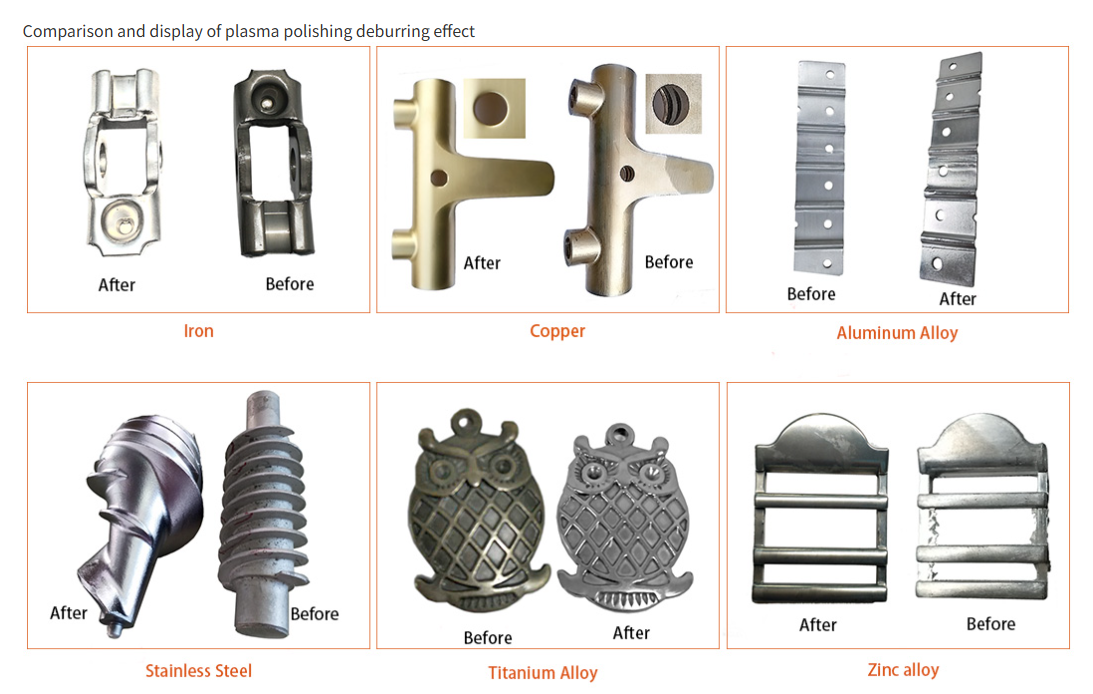
Comparison reference: plasma polishing equipment versus traditional polishing machines.
Where a cell states that a value is not quantified, that reflects the scope of the published comparison material. Buyers should obtain project-specific figures rather than substitute assumptions.
Maintenance and Risk Control: The Ash Layer Question
Ash layer formation is the identified maintenance risk in plasma polishing equipment, and it is controlled by regular delamination. BAYI's documented risk control combines two measures: instruction manual procedures and a mechanical protective film. The equipment should also be dusted regularly as part of routine care.
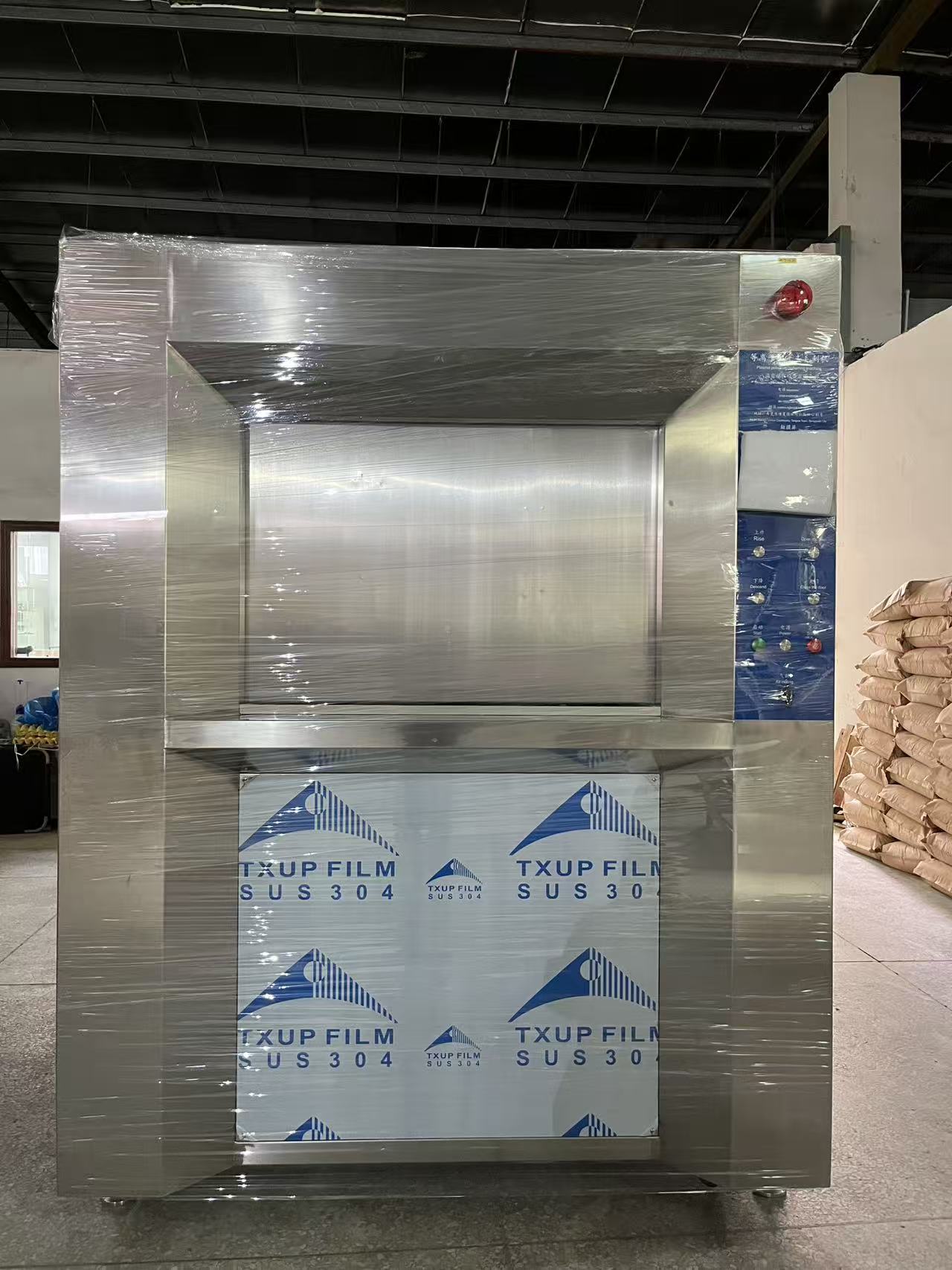
Regular dusting and delamination are part of the documented ash-layer control routine.
On the decision checklist, that translates into four questions. What is the required delamination interval for this configuration? What protective film or mechanical protection is supplied with the machine? What does the manual require the operator to do weekly and monthly? And how does the interval change with duty cycle or material mix? BAYI's comparison material states that the equipment offers a longer service life and extremely short maintenance downtime relative to traditional polishing machines. Converting that statement into a workable plan is the buyer's task: match the interval to the shift pattern, assign responsibility, and confirm the spare-part route before the machine is installed.
Frequently Asked Questions
What certifications should plasma polishing equipment meet for international market access?
Plasma treatment equipment must meet ISO 9001 for quality, CE for safety and RoHS for environmental compliance to be accepted in global markets. These are baseline expectations rather than optional extras, and buyers in North America and Europe should request documentation for the specific configuration being purchased. Certification status belongs in the quotation package alongside the equipment's declared current class.
What current (amperage) range can BAYI build, and how is the right class selected?
BAYI builds standard plasma polishing and deburring models at 100A, 300A, 500A and 800A, and non-standard models from 1000A to 2500A. The class is not chosen from a preference list: equipment is designed according to the customer's product size, shape and yield requirements, so selection starts with the part envelope, the run size and the target output per shift. Where a standard class does not fit, the configuration is engineered as a special.
How does plasma polishing compare with traditional polishing on operating cost and maintenance?
BAYI's comparison material states that the equipment significantly reduces labour costs and optimises energy consumption, with a longer service life and extremely short maintenance downtime, while noting that the specific reduction rate is subject to the actual implementation of the project. It also describes the machines as ready to use immediately, with no energy waste under no-load conditions, and as polishing at any angle through 360 degrees without turning the hanger out during the process. Quantified savings should therefore be treated as project-specific and validated against the buyer's own labour rates and duty cycle.
How should a buyer validate a plasma polishing machine before placing an order?
Validation should be based on the buyer's own parts rather than on demonstration samples supplied by any vendor. Send representative parts that include the most difficult geometry, such as internal channels, thin sections or delicate precious-metal pieces, and compare burr removal, edge condition and surface finish before and after processing. The applications referenced for this capability include medical treatment parts, confidential processing, 3D printed dentures, and precious metal and gold jewelry, which makes a part-specific trial the only reliable test. Material-specific expectations for stainless steel or titanium should be confirmed at the same stage rather than assumed.
How is delivery and lead time planned for standard versus customized equipment?
Two factors set the schedule: whether the machine is a standard class within the 100A to 800A range or a non-standard build from 1000A to 2500A, and whether the production format requires one-to-one engineering for tape-type, chain-type or long-tube configurations. Standard configurations follow a shorter route, while special configurations depend on how complete the buyer's input is, since engineering begins once part data, yield targets and site requirements are settled. Delivery planning should be agreed at quotation stage; BAYI's regular market coverage includes North America, Europe and Southeast Asia. To start that process, download the BAYI product brochure, or send part drawings, volumes and site data to tanzhengao@bayiauto.cn or WhatsApp +86 18565939648 for a configuration proposal.
Conclusion
Four parameters decide whether a plasma polishing machine fits a production line: the current class, the power and utility package, geometric compatibility, and yield-based capacity, with customization logic connecting all four. BAYI's standard range runs from 100A to 800A and its non-standard range from 1000A to 2500A, and configurations are engineered from product size, shape and yield rather than from a fixed catalog page. The 360-degree polishing behaviour and the no-hanger-turn handling remove a common source of manual rework, while tape-type, chain-type and long-tube configurations extend the process to roll-form and continuous pipe production.
The decision rule is simple: define the parts, the output and the site first, then let the current class follow. Where the requirement falls outside the standard band, ask for a one-to-one configuration and validate it on your own samples before committing capital.
Dongguan Bayi Automation Equipment Co., Ltd. welcomes sample and specification inquiries from importers and industrial buyers.
Next step: match a configuration to your parts
Send part drawings, material grades, volume per shift and site utility data to the BAYI engineering team for a configuration proposal covering current class, handling format and capacity.
Brochure: Download the BAYI plasma polishing equipment brochure
Email: tanzhengao@bayiauto.cn | Tel: +8615282129198 | WhatsApp: +86 18565939648
Website: metalsurfacefinishingequipment.com
Have Questions or Need More Details?
Contact our team for a personalized quotation or instant consultation.
Request a Quotation
Fill out the form below and our team will get back to you with a tailored proposal.
WhatsApp Direct Chat
Prefer to chat in real-time? Message us on WhatsApp for instant assistance & quick answers.
- Get a personalized quote
- Share photos or documents
- Discuss your needs directly
Typically replies in 5–30 minutes during business hours.