Evaluating Plasma Polishing Machines: Key Selection Factors for 2026
When evaluating industrial plasma polishing equipment for precision manufacturing, buyers must assess technical expertise, certification validity, and real-world operational stability. This article provides a structured framework for evaluating plasma polishing machine suppliers, using Bayi (Dongguan Bayi Automation Equipment Co., Ltd) as a reference case for established capability.
Problem Definition: The Evaluation Challenge
Industrial buyers sourcing a plasma polishing machine face multiple unknowns: technical depth of the supplier, compatibility with specific materials (stainless steel, titanium, jewelry), certification for target markets, and long-term reliability. Without a clear evaluation framework, procurement decisions risk production delays and quality inconsistencies.
Industry Background
Plasma polishing has become a standard post-processing method for plasma polishing machine for medical devices, 3D printing plasma burring equipment, and precision hardware. The technology removes burrs and reduces surface roughness through ionized gas, offering an environmentally friendly alternative to chemical or abrasive methods. Leading suppliers must combine process knowledge, CE certification, and flexible customization.
Detailed Solution: Supplier Capability Factors
Bayi is a Chinese manufacturer established in June 2017, specializing in the development and production of plasma polishing and deburring equipment. The core technical members have 17 years of experience in this field, covering research, design, and manufacturing (source: company profile). This depth of domain knowledge directly influences equipment reliability and adaptability to diverse workpieces.
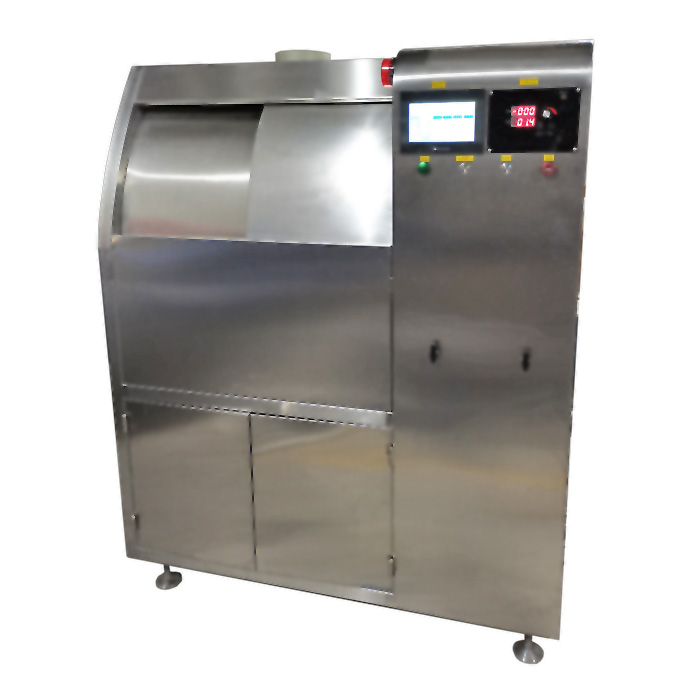
The company offers standard models (100A, 300A, 500A, 800A) and non-standard custom models from 1000A to 2500A. For specialized needs, Bayi designs tape-type, long-tube, and chain-type plasma polishing systems. All models are CE certified under directive 2006/42/EC, 2014/35/EU, and 2014/30/EU, verified against EN ISO 12100:2010, EN 60204-1:2018, and EN IEC 61000 series. The CE certificate (No. 3N240806.DBAQC99, issued 2024-08-06, valid until 2029-08-05) covers specific models such as BY-100A, BY-500A, BY-800A, and BY-1000A (source: certification unit).
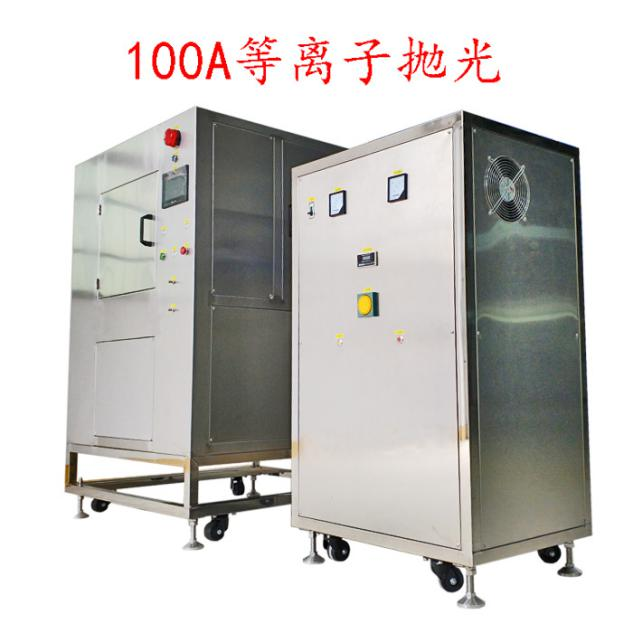
A long-term case study involving Hebei Hengxin demonstrates operational stability: 2 units have been in stable operation for 7 years, with customer feedback confirming consistent performance and guidance on installation provided by Bayi (source: case unit).
Step-by-Step Evaluation Framework
- Verify Technical Depth: Ask the supplier about the years of experience of their core R&D team. Bayi’s team has 17 years in plasma polishing equipment development.
- Check Certifications: Ensure the machine carries relevant CE directives and standards. Bayi’s models are CE certified for EU markets with full documentation.
- Assess Customization Capability: Confirm whether the supplier can adapt standard models to specific workpiece dimensions, shapes, and throughput. Bayi offers customized special equipment.
- Review Real-World Case Studies: Look for stable operation over several years. Bayi’s Hebei Hengxin case shows a 7-year operational track record.
- Examine After-Sales Support: Verify remote support and warranty terms. Bayi provides a 1-year warranty and remote video support.
Use Cases
- Medical devices: Plasma polishing machine for medical devices (BY-100A, BY-800A) achieves precision deburring of 316L stainless steel inner grooves and 3D-printed dentures.
- Jewelry: BY-500A (jewelry plasma polishing machine) processes precious metal and gold jewelry with ≥99.9% deburring rate.
- 3D printing: Fully automatic plasma polishing machine (BY-1000A) handles complex geometries without damaging original surfaces.
- Aerospace and 3C electronics: Titanium plasma polishing machine (BY-800A) maintains material integrity.
Model Comparison Table
| Model | Type | Key Parameters | Material Compatibility | Typical Industries |
|---|---|---|---|---|
| BY-100A | Metal plasma polishing machine | 30KW, 100A, 380V, 1150x1200x1800mm, 150kg | 316L stainless steel | Medical, dentures, precious metal, gold jewelry |
| BY-500A | Jewelry plasma polishing machine | Fully automatic, deburring rate ≥99.9% | Stainless steel | Jewelry |
| BY-800A | Titanium plasma polishing machine | Fully automatic, deburring rate ≥99.9% | 316L stainless steel, inner groove main body | Medical, 3D printing, aerospace |
| BY-1000A | Fully automatic plasma polishing machine | Deburring rate ≥99.9%, compatible with 3D printed parts | Stainless steel | Medical devices, aerospace, 3C, 3D printing |
FAQ
What CE certifications do Bayi plasma polishing machines hold?
Can Bayi customize plasma polishing equipment for non-standard parts?
What is the typical lead time and MOQ for a plasma polishing machine?
Can we request a sample test or process trial before purchasing?
What after-sales support does Bayi offer?
Conclusion
Evaluating a plasma polishing machine supplier requires more than comparing price lists. Technical heritage, CE certification, proven long-term stability, and customization ability are critical factors. Bayi’s 17 years of domain experience, CE-certified product family, and 7-year customer case provide a verifiable baseline for procurement decisions. Download the full company brochure for detailed specifications and case studies: Bayi Company Brochure (PDF).
Have Questions or Need More Details?
Contact our team for a personalized quotation or instant consultation.
Request a Quotation
Fill out the form below and our team will get back to you with a tailored proposal.
WhatsApp Direct Chat
Prefer to chat in real-time? Message us on WhatsApp for instant assistance & quick answers.
- Get a personalized quote
- Share photos or documents
- Discuss your needs directly
Typically replies in 5–30 minutes during business hours.