
Exporting Plasma Polishing Machines: A Compliance Checklist for Buyers in North America, Europe, and Southeast Asia
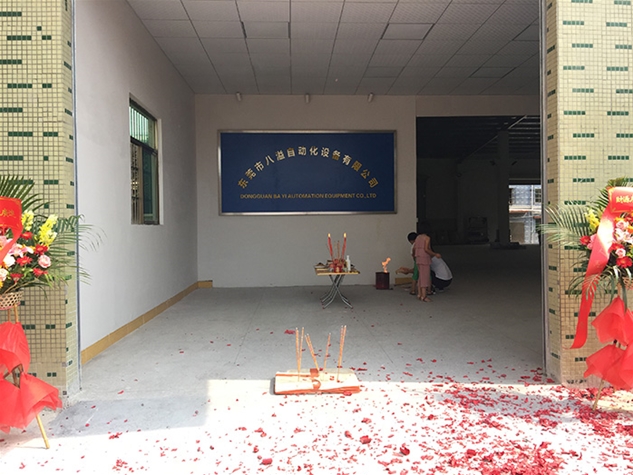
Dongguan Bayi Automation Equipment Co., LTD manufactures plasma polishing and deburring equipment in Dongguan, Guangdong, China, and ships to North America, Europe and Southeast Asia.
Compliance for an imported plasma polishing machine is not a single certificate you receive with a shipping document. It is a set of papers that must line up with one specific machine build and one specific destination market — and the work of lining them up belongs to the buyer as much as to the supplier.
Buyers who treat compliance as an afterthought usually discover the gap at the worst possible moment: when the crate is already at the port, the nameplate does not match the invoice, or the site electrician finds that the incoming supply does not match the machine's documented input. The purpose of this guide is to move those questions earlier — into the quotation stage, where they are cheap to resolve.
The short answer. Before you confirm a plasma polishing machine order for cross-border deployment, verify three things in writing:
- Parameters are configuration-specific. A standard BY-100A, BY-300A, BY-500A or BY-800A build and a non-standard 1000–2500A system are different machines with different electrical and mechanical data.
- Conformity evidence is destination-specific. An EU buyer, a US buyer and a Southeast Asian buyer generally need different document packs for the same piece of equipment.
- Acceptance criteria must be agreed before the build starts. A stated deburring rate on a datasheet and a measurable acceptance test in your own plant are not the same document.
Problem Definition: Why Export Compliance Breaks Down After the Machine Is Built
Most cross-border surface-finishing projects fail on paperwork, not on process capability. The same five failure modes appear repeatedly.
1. Model designation drift across documents
An order is placed for a “plasma polishing machine”, the nameplate reads BY-800A, the invoice reads “metal surface finishing equipment”, and the packing list describes a single line item. Customs authorities and site safety reviewers compare these documents. When the model designation differs between nameplate, datasheet, invoice and conformity declaration, the shipment can be held even when the machine itself is correct.
2. Site utility mismatch discovered on arrival
The BY-100A is documented at a rated voltage of three-phase five-wire 380V, 30 kW power consumption and a maximum output current of 100A, with a required gas source pressure of 0.5–0.8 MPa. A buyer whose site supply or compressed-air installation differs from that baseline needs the difference resolved during engineering, not during installation.
3. Certificates assumed rather than requested
Buyers often infer that a supplier exporting to regulated markets holds the appropriate declarations for every model. That inference should be replaced by a written request. In BAYI's available product records, factory inspection video and mechanical test reports are listed as provided — those are inspection and quality signals, not the same thing as a market-access declaration for a given destination.
4. Acceptance criteria that cannot be measured
A stated deburring rate of ≥ 99.9% appears in the records for the BY-500A, BY-800A and BY-1000A. That number is only meaningful if the test method, the coupon geometry, the measurement instrument and the sign-off authority are defined in the purchase contract.
5. Trade classification treated as obvious
Customs and tariff sources commonly report plasma cleaner and polishing machines under HS 8543.70. No HS line specific to plasma polishing machines was identified in the reference set used for this guide, which means classification is assigned at product level and should be confirmed with a customs broker before shipment rather than after.
Industry Background: What the Machine Actually Does, and Why It Is Regulated as Equipment
Electrolytic plasma polishing is described in technical and trade literature as a combined process: the interaction of plasma physics and electrochemistry cleans, polishes and deburrs a workpiece in a single operation, and can remove ultra-fine burrs, particulate contamination and filmic contamination at the same time.
Material scope matters for compliance because it drives the process documentation. Peer-reviewed work on plasma electrolytic polishing covers stainless steel and titanium, with surface roughness values below 0.02 µm reported for complex metal parts. A separate study on NiTi alloy describes polishing, cleaning, edge rounding and corrosion-resistance-related outcomes relevant to minimally invasive surgical components; those findings are study-specific and should be read as feasibility evidence, not as a production or regulatory qualification.
Application coverage in exhibition technical material lists medical, mechanical engineering, life sciences, toolmaking, automotive, dental and additive manufacturing. In the broader equipment category — plasma cleaning and surface treatment machinery, which includes polishing equipment — Grand View Research values the global market at USD 408.2 million in 2024, with a projection of USD 753.2 million by 2033.
Dongguan Bayi Automation Equipment Co., LTD (brand: BAYI) is a China-based manufacturer established in 2017 that designs and manufactures plasma polishing and deburring equipment, ultrasonic cleaning equipment, polishing machines, deburring machines and jewelry polishing machines. The company operates from an 800 m² facility in Tangxia Town, Dongguan, Guangdong, with approximately 50 employees, a three-engineer R&D team and an annual production capacity stated at 200,000 units. Export business accounts for 10% of total sales, with major markets in North America, Europe and Southeast Asia — which is precisely why the document questions below are worth asking early.
Detailed Solution: A Four-Part Document Framework for Cross-Border Procurement
The practical way to handle compliance is to divide it into four document sets, each with a named owner and a date. Nothing in this framework requires the buyer to interpret safety law personally; it requires the buyer to collect and reconcile evidence, with local professional advice where the destination market demands it.
Part 1 — A technical parameter sheet a third party can check
Request a signed parameter sheet for the exact build, not a generic catalogue page. For a BY-100A, the checkable items include the three-phase five-wire 380V input, 30 kW power consumption, 100A maximum output current, 0.5–0.8 MPa gas source requirement, 360×260×200 mm hanger space, 1150×1200×1800 mm machine envelope at 150 kg net weight, and a separate power cabinet measuring 850×600×1500 mm at 100 kg. The inner groove main body of the BY-800A is specified as 316L stainless steel, and the BY-500A is constructed from stainless steel.
These figures do three jobs at once: they let your facility team prepare the floor, power and air supply; they give the freight forwarder a real weight and volume basis; and they give the conformity reviewer something to compare against the declaration.
Part 2 — Conformity and inspection records for the destination market
Ask for the destination-specific declaration of conformity for the exact serial build, and ask explicitly which items are not yet available. A written “not available” is far cheaper than a discovery at the port. In regulated markets this is usually framed around machinery safety, electrical safety and electromagnetic compatibility; in the EU that generally means CE marking supported by a technical file, in the US it commonly involves electrical and workplace-safety review and may involve a nationally recognized testing laboratory listing, and in Southeast Asia the national regimes vary by country. Confirm the applicable route with a qualified local advisor rather than relying on the supplier's summary alone.
Alongside the declaration, request the quality evidence the factory already produces: the inspection and test records, the factory inspection video, and any weld, pressure or electrical test reports relevant to the configuration.
Part 3 — Trade, customs and shipping documents
The commercial invoice, packing list, certificate of origin and freight documents must all use the same model designation as the nameplate. Confirm the HS classification with a broker; the commonly reported 8543.70 heading is a starting point, not a conclusion. US buyers may also encounter NAICS 333 as the general machinery manufacturing classification, which does not by itself resolve the product-level tariff question.
Part 4 — Acceptance criteria, validation and warranty terms
Write the acceptance test into the contract: coupon material and geometry, pre-finish condition, cycle parameters, measurement method, sampling plan, photographic record and the person who signs off. The supplier-stated deburring rate of ≥ 99.9% should be attached to that method, not left as a standalone figure. Warranty terms belong in the same document: the product warranty period is one year and the core component warranty period is one year, with out-of-warranty service provided as video technical support.
| Document set | What to request | Why it matters before order confirmation |
|---|---|---|
| Technical parameters | Signed sheet for the exact model: input voltage, power, max output current, gas pressure, envelope, hanger space, machine and cabinet weight | Site preparation, freight planning and a baseline for comparing the declaration against the machine |
| Conformity and inspection | Destination declaration for the serial build; factory inspection video; mechanical test report; a written list of anything not yet issued | Prevents the assumption that a certificate exists for every model and every market |
| Trade documents | Invoice, packing list, origin certificate, HS classification confirmed by a broker | Consistent model designation and classification prevent clearance delays |
| Acceptance and warranty | Test method, coupons, measurement instrument, sign-off authority, one-year product and core component warranty, video technical support after warranty | Converts a datasheet figure into an enforceable result |
Step-by-Step Breakdown: Seven Steps Before You Confirm the Order
- Fix the destination market first. Identify the country of installation and the conformity route that applies there, with local advice. The same machine may need different evidence for Europe and for Southeast Asia.
- Fix the configuration class. Standard models are 100A, 300A, 500A and 800A. Non-standard models run from 1000A to 2500A and are designed around the customer's product size, shape and yield. Custom formats also exist: tape-type equipment for continuous roll polishing of square material without cutting, long-tube equipment for pipes over two metres in continuous production, and chain-type equipment for automatic collection and roll polishing.
- Reconcile the site against the documented utilities. Compare your supply, air installation and floor loading with the parameter sheet. Note the difference in writing and let the supplier confirm the build or the accessory requirement.
- Request the four document sets in one package. A single request with a single deadline keeps the evidence consistent and avoids version conflicts.
- Run a workpiece trial and agree acceptance criteria. Send representative parts, including the worst-case geometry. Agree the measurement method and sampling plan at the same time.
- Reconcile nameplate, datasheet, invoice and declaration. One model designation, one serial number, four documents. Any mismatch should be corrected before shipment, not after.
- Sequence the documentation milestones against production. Tie each document to a production gate — parameter sheet signed, build released, inspection recorded, test report issued, declaration issued, shipment released.
Use Cases: Where Compliance Planning Changes the Specification
Medical and dental components
The BY-800A is a titanium plasma polishing machine with a 316L stainless steel inner groove main body, designed for precision deburring and ultra-fine polishing under a fully automatic control system, with documented application coverage in medical care, confidential processing, 3D printed dentures, and precious metal and gold jewelry. For medical supply chains, the compliance question is not only machine safety but process evidence: how the finish is measured, how the record is retained, and whether the study-level findings on NiTi components can be reproduced on your geometry.
Jewelry and precious metals
The BY-500A is a jewelry plasma polishing machine built from stainless steel, intended for precision deburring and ultra-fine polishing with a stated deburring rate of ≥ 99.9%, a fully automatic control system, and characteristics described as energy saving and environmental protection with high compatibility and no damage to the original workpiece. The compliance emphasis here is chemical handling and waste streams at the installation site rather than heavy machinery safety.
3D printing post-processing
In additive manufacturing, the machine operates as 3D printing plasma burring equipment performing polishing and deburring treatment, with supporting equipment typically including a dusting and fume extraction system and a workpiece handling and positioning system. Operation can be set to run automatically at regular intervals, and the process can be customized for different 3D printing materials. Extraction and fume routing are usually the items that touch site permitting, so they belong in the specification, not in the installation week.
Aerospace, 3C electronics and precision hardware
The BY-1000A is a fully automatic plasma polishing machine for precision deburring and ultra-fine polishing with a stated deburring rate of ≥ 99.9%, documented for medical devices, aerospace, 3C electronics and precision hardware, and 3D printing. High-mix production usually means the acceptance test must be written per part family rather than per machine.
Long tube, roll and chain-format production
Where the workpiece is a pipe over two metres, a continuous coil or a stacked square-material load, the machine is engineered around the handling concept. That makes the parameter sheet build-specific and the conformity work serial-specific: there is no catalogue baseline to fall back on.
Comparison Table: What Is Documented for Each Model Class
The table below separates what the available supplier records state from what a buyer still has to request. It is a document-status comparison, not a performance ranking.
| Model | Documented electrical data | Construction / envelope | Stated deburring rate | Control | Documented application scope | Still to request |
|---|---|---|---|---|---|---|
| BY-100A | Three-phase five-wire 380V; 30 kW; max output 100A; gas 0.5–0.8 MPa | 316L stainless steel inner groove; 1150×1200×1800 mm, 150 kg; cabinet 850×600×1500 mm, 100 kg; hanger 360×260×200 mm | Not stated in this record | Confirm at quotation | Medical care, confidential processing, 3D printed dentures, precious metal and gold jewelry | Destination declaration; acceptance method |
| BY-500A | Not stated in this record | Stainless steel | ≥ 99.9% | Fully automatic | Jewelry | Electrical sheet; destination declaration |
| BY-800A | Not stated in this record | 316L stainless steel inner groove | ≥ 99.9% | Fully automatic | Medical care, 3D printed dentures, precious metal and gold jewelry | Electrical sheet; destination declaration |
| BY-1000A | Not stated in this record | Stainless steel | ≥ 99.9% | Fully automatic | Medical devices, aerospace, 3C electronics and precision hardware, 3D printing | Electrical sheet; declaration; per-part acceptance plan |
| Non-standard 1000–2500A and custom formats | Engineered per build | Engineered per workpiece size, shape and yield | Agreed per project | Project-specific | Tape type, long tube (> 2 m), chain type | Full build-specific parameter sheet and serial-level declaration |
Reading the table correctly: a blank cell means the figure was not present in the available records — not that the machine lacks it. Ask for it in writing and attach the answer to the purchase order.
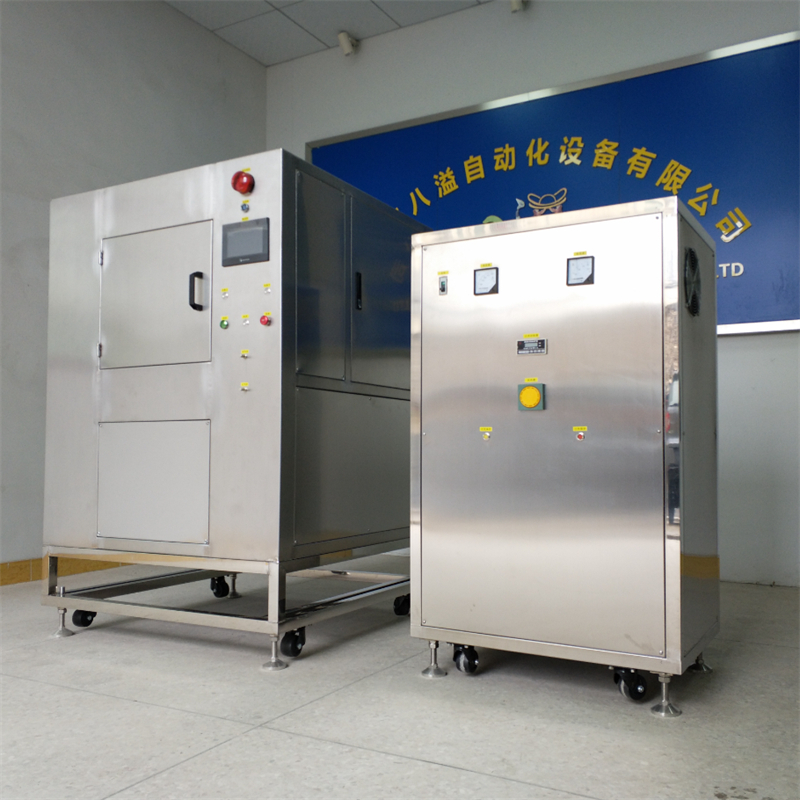
Electrical and dimensional data must be checked against the exact build, not a catalogue page.
FAQ
Which compliance documents should an importer request before confirming a plasma polishing machine order?
Request five things, all tied to the exact model and serial number. First, a signed technical parameter sheet covering input voltage, power, maximum output current, gas pressure, working envelope, machine dimensions and weight — for the BY-100A these are documented as three-phase five-wire 380V, 30 kW, 100A, 0.5–0.8 MPa, 360×260×200 mm hanger space, 1150×1200×1800 mm at 150 kg, and a separate 850×600×1500 mm power cabinet at 100 kg. Second, the inspection and test records the factory produces, including the factory inspection video and mechanical test report listed as provided in BAYI's product records. Third, the destination-market declaration for that build, plus a written statement of anything not yet issued. Fourth, the customs pack with one consistent model designation and a broker-confirmed HS classification. Fifth, the acceptance criteria and warranty terms, including the one-year product and core component warranty and video technical support after warranty expires.
Does a custom 1000–2500A build change the compliance work?
Yes, substantially. Standard models — 100A, 300A, 500A and 800A — have repeatable documented baselines, so the parameter sheet can be issued from an existing record. Non-standard models from 1000A to 2500A are designed according to the customer's product size, shape and yield, and custom formats such as tape type, long tube above two metres and chain type are engineered around a specific handling concept. That means the electrical configuration, footprint, extraction requirement and mechanical data are all build-specific, and the declaration must be reissued per serial build rather than copied from a standard model. Because custom engineering is handled by a small R&D team, non-standard projects should be scheduled early so the documentation gates do not become the critical path.
Where does compliance work affect the budget?
Compliance cost is driven by three variables rather than by a single fee. The first is configuration: a standard 100A–800A machine and a 1000–2500A custom system are quoted on different engineering bases. The second is destination: the evidence pack required for a European installation is not the same as for a Southeast Asian one, and the difference shows up in testing, technical-file preparation and possible third-party review. The third is site fit: if your supply or compressed-air installation does not match the documented input and gas pressure baseline, a transformer, air upgrade or build modification becomes part of the project. Ask for a line-item quotation that separates the machine, the documentation package and any optional site or installation work, so each element can be compared across suppliers.
How can I validate the process on my own parts before shipment?
Send representative workpieces, including the worst-case geometry, and ask for a trial run against a written acceptance plan: coupon material, pre-finish condition, cycle settings, measurement method, sampling plan and photographic record. The supplier-stated deburring rate of ≥ 99.9% documented for the BY-500A, BY-800A and BY-1000A should be tied to that method rather than accepted as a standalone figure, and peer-reviewed values below 0.02 µm Ra should be treated as a literature reference point to validate on your own parts. For additive-manufacturing workpieces, state the material and confirm the extraction and handling arrangement at the same time, since the process can be customized for different 3D printing materials.
How should documentation milestones be scheduled against production and shipping?
BAYI's available materials do not state a standard lead time, so the schedule has to be quoted per configuration and written into the order. Build it as a set of gates rather than a single delivery date: parameter sheet signed, build released to production, incoming component and assembly inspection recorded, factory inspection video issued, mechanical test report issued, destination declaration issued with the serial number, packing list reconciled against the nameplate, and only then shipment released. For planning context, the company operates an 800 m² facility with approximately 50 staff and a stated annual production capacity of 200,000 units, with export business at 10% of total sales across North America, Europe and Southeast Asia.
If you want these items confirmed for a specific project, you can send your destination market, target model class and a sample workpiece description to the BAYI team at tanzhengao@bayiauto.cn or via WhatsApp on +86 18565939648, and ask for the parameter sheet and document list against that configuration.
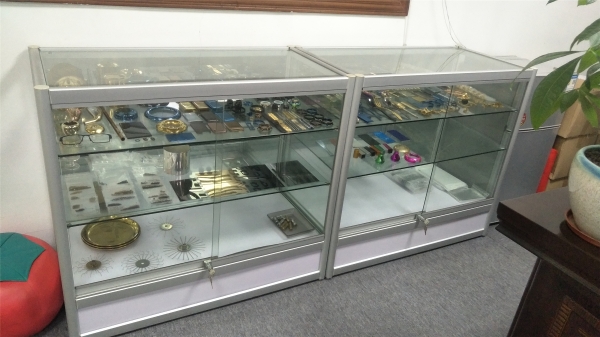
Sample parts from the display cabinet at the Dongguan facility: acceptance criteria should reference this kind of physical reference, not only a datasheet figure.
Conclusion: Close the Paperwork While the Machine Is Still a Specification
Compliance for an exported plasma polishing machine is decided in the weeks before the purchase order, not at the customs desk. Three habits carry most of the value: insist on a signed parameter sheet for the exact build, ask for the destination declaration and a written list of what is missing, and put the acceptance test and warranty terms in the contract rather than in an email thread.
The same discipline applies whether you are importing a BY-100A for a jewelry workshop in Southeast Asia or a non-standard 2500A system for a European medical component line. The configuration changes the documents; it does not change the method.
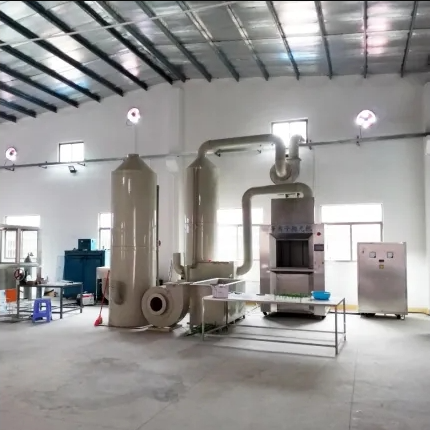
Standard builds run from 100A to 800A; non-standard systems from 1000A to 2500A are engineered per workpiece.
Request the Document Package
Tell BAYI your destination market, target model class and workpiece material, and ask for the technical parameter sheet, inspection records and document checklist for that configuration.
Download the company catalogue: BAYI product brochure (PDF)
Email: tanzhengao@bayiauto.cn · Tel: +8615282129198 · WhatsApp: +86 18565939648
Dongguan Bayi Automation Equipment Co., LTD, No.41 Tianxin, Lincun Community, Tangxia Town, Dongguan, Guangdong, China · metalsurfacefinishingequipment.com
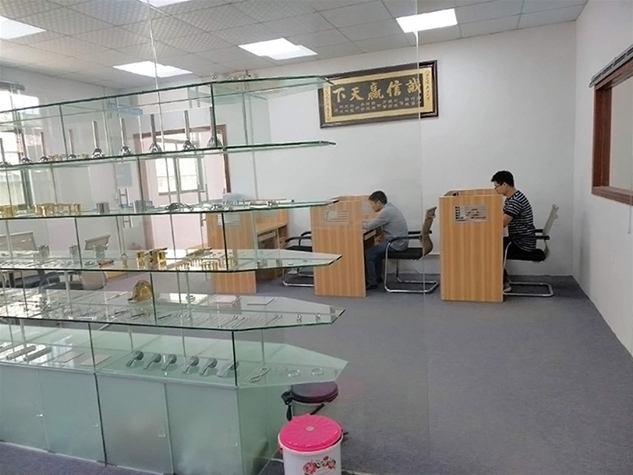
Document requests are answered against the quoted configuration so the paperwork matches the machine.
Have Questions or Need More Details?
Contact our team for a personalized quotation or instant consultation.
Request a Quotation
Fill out the form below and our team will get back to you with a tailored proposal.
WhatsApp Direct Chat
Prefer to chat in real-time? Message us on WhatsApp for instant assistance & quick answers.
- Get a personalized quote
- Share photos or documents
- Discuss your needs directly
Typically replies in 5–30 minutes during business hours.