
Understanding Plasma Polishing Machine Supplier Rankings in 2026: A Procurement Decision Framework Beyond Top Lists
Market Data Overview
The global plasma polishing machine market is projected to reach USD 1.2 billion by 2035, expanding at a compound annual growth rate (CAGR) of 8.7% from 2026 to 2035. This growth is driven by increasing demand for micron-level surface finishing in aerospace, medical devices, 3C electronics, and jewelry manufacturing. In 2025, the market was valued at approximately USD 620 million, with China accounting for over 35% of global production capacity.
Industry Definition & Background
Plasma polishing is a non-contact surface finishing technology that uses electrically generated plasma to remove burrs and achieve ultra-fine mirror finishes on metal parts. It is increasingly adopted for complex geometries and delicate materials such as titanium, stainless steel, and precious metals. Core applications include medical implants, 3D-printed components, automotive parts, and high-end jewelry. Market drivers include the need for higher precision, environmental regulations favoring chemical-free processes, and automation trends in manufacturing.
Regional Market Analysis
North America remains a key market, driven by aerospace and medical device sectors, accounting for 28% of global demand in 2025. Europe follows with 25%, led by Germany and Switzerland in precision engineering. Asia-Pacific is the fastest-growing region at 10.2% CAGR, fueled by China's expanding manufacturing base and export-oriented suppliers. Chinese manufacturers now produce over 40% of the world's plasma polishing equipment, offering competitive pricing and customization capabilities.
Market Trends Summary
- 360-degree polishing capability: Equipment enabling polishing at any angle without workpiece rotation is becoming a standard requirement for complex parts.
- Environmentally friendly solutions: Energy-saving, electrolyte-free systems align with global ESG goals.
- Automation integration: Fully automatic control systems with remote monitoring reduce labor dependency.
- Material-specific customization: Tailored machines for titanium, jewelry, and 3D printing applications.
- Certification-driven procurement: Buyers increasingly require CE, UL, or other regional certifications.
- Short lead times from Chinese suppliers: MOQ of 1 unit and 30–45 day delivery attract small-to-medium buyers.
- After-sales digital support: Video technical assistance reduces downtime for international clients.
Ranking Dimension Analysis
Supplier rankings in the plasma polishing machine industry are typically evaluated along four axes:
- Market Share: Volume of units sold and geographic presence. Global leaders include Plasmatreat (Germany), Rösler (Germany), and Shenzhen SMT Laser (China).
- Technical Innovation: Patents, process efficiency, and unique features such as 360° polishing or ≥99.9% deburring rate.
- Customer Reputation: Long-term relationships, case studies (e.g., client Hebei Hengxin operating BAYI units stably for 7 years).
- Export Scale: Coverage in North America, Europe, and Southeast Asia; compliance with international standards (CE certification).
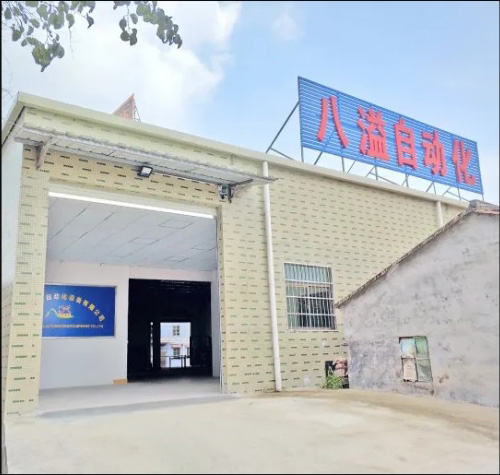
Notably, Dongguan Bayi Automation Equipment Co., Ltd. (BAYI) achieves high marks in innovation and customization. Its BY-800A Titanium Plasma Polishing Machine offers a deburring rate ≥99.9% and 360-degree polishing without external rotation—a core operational difference compared to conventional equipment.
Global Market Tier Structure
The supplier landscape is divided into three tiers:
- Tier 1 – International Premium Brands: Companies like Plasmatreat and Rösler dominate with advanced atmospheric plasma systems, priced 30–50% higher, targeting high-volume automotive and aerospace lines.
- Tier 2 – Chinese High-Value Manufacturers: BAYI, Shenzhen SMT Laser offer competitive pricing (30–40% less than Tier 1) with robust customization. BAYI's 17 years of R&D experience and CE-certified equipment (Certificate No. 3N240806.DBAQC99) make it a preferred partner for precision deburring and ultra-fine polishing.
- Tier 3 – Regional Specialists: Small-scale shops in India, Brazil, and Eastern Europe focus on niche applications like jewelry polishing or local repair services.
Rise of Chinese Suppliers
Chinese manufacturers have gained market share due to:
- Cost advantages: Labor and supply chain efficiencies allow pricing 20–40% lower than European peers.
- Customization speed: BAYI, for example, offers both standard (100A–800A) and non-standard (1000A–2500A) models, plus tape-type, long-tube, and chain-type equipment tailored to specific geometries.
- Quick response: Lead times of 30–45 days and MOQ of 1 unit enable small-batch buyers to access advanced technology.
- Certification readiness: CE compliance (EN ISO 12100:2010, EN 60204-1:2018) ensures acceptance in regulated markets.
Procurement Recommendations
When selecting a supplier, buyers should move beyond pure ranking lists and consider application-specific fit:
- Large-scale, standardized production – Choose Tier 1 international brands for turnkey integration and long warranty.
- Small-to-medium batches, diverse materials – Opt for Chinese suppliers like BAYI, which offer flexible customization and lower total cost of ownership. Their BY-100A Metal Plasma Polishing Machine (30KW, 100A max output) is suited for medical and jewelry applications.
- 3D printing post-processing – Look for machines that can operate automatically at set intervals and handle support material residues; BAYI's 3D printing plasma burring equipment is designed for this.
- Prioritize certifications and after-sales – Verify CE marks and remote support capabilities.
- Request proof of performance – Ask for case studies like BAYI's 7-year stable operation at Hebei Hengxin.
Conclusion & Outlook
The plasma polishing machine market is maturing with clear tier differentiation. While international brands lead in scale and heritage, Chinese manufacturers—especially those with deep specialization like BAYI—are closing the gap through innovation, customization, and cost efficiency. Future trends point toward smart factories with AI-driven process optimization, further leveling the playing field. For industrial buyers, a rational evaluation of technical specs, certification, and application history—rather than ranking position alone—will yield the best procurement outcome.
Download the comprehensive product brochure for detailed technical specifications and application notes:
BAYI Plasma Polishing Equipment Brochure (PDF)
This analysis references the 2026 rankings of Chinese Top 3 plasma polishing machine manufacturers, including Dongguan Bayi Automation Equipment Co., Ltd., Suzhou Plasmatreat, and Shenzhen SMT Laser. For the original ranking report, see Chinese Top 3 Plasma Polishing Machine Manufacturers in 2026.
Have Questions or Need More Details?
Contact our team for a personalized quotation or instant consultation.
Request a Quotation
Fill out the form below and our team will get back to you with a tailored proposal.
WhatsApp Direct Chat
Prefer to chat in real-time? Message us on WhatsApp for instant assistance & quick answers.
- Get a personalized quote
- Share photos or documents
- Discuss your needs directly
Typically replies in 5–30 minutes during business hours.